Blog
Brand Awareness Campaigns: A Guide for Small Budgets
Published May 30, 2026
A new store usually treats brand awareness like something to buy later, after the first profitable month. That mindset costs small brands more than it saves, because cold traffic rarely converts well when nobody recognizes the product, the problem, or the store name.
For a one-person Shopify or WooCommerce shop, brand awareness campaigns are not a vanity line item. They are a controlled way to warm up future buyers before asking for the click, the add to cart, or the purchase. Analysts at GroupM projected global advertising revenue would pass the trillion-dollar mark in 2024, which tells you how much money brands still put into staying memorable in crowded markets. Big companies can afford waste. Small stores cannot, so awareness has to be run with tighter audiences, clearer creative, and a way to check whether it improves downstream performance.

The caution around awareness spend is fair. SegmentStream's analysis of brand awareness spending explains why broad, poorly measured campaigns often buy cheap impressions and low-value audiences instead of real business impact.
That does not mean new DTC brands should skip awareness. It means they should run it like a testable investment on Meta, with a narrow audience, one clear promise, and a simple lift check tied to traffic quality, branded search, and retargeting results.
Table of Contents
- Rethinking Brand Awareness for Your New Store
- Setting Goals That Justify Your Ad Spend
- Finding Your Audience and Your Angle
- Designing Creatives That Build Brand Memory
- Budgeting and Measuring Your Campaign Lift
- Your First Brand Awareness Campaign Checklist
Rethinking Brand Awareness for Your New Store
Most new store owners think awareness means paying for eyeballs and hoping something good happens later. That's why they skip it and put every cent into conversion campaigns. On paper, that feels efficient. In practice, it often forces Meta to push hard offers to people who don't know you, don't trust you, and don't care yet.
Awareness isn't the opposite of performance. It's the part that makes future performance cheaper and more stable. If someone sees your product, understands what problem it solves, and remembers your name a few days later, your retargeting and sales campaigns stop working from zero.
Why this matters on a tight budget
A small store doesn't need broad fame. It needs recognition inside a narrow buying pocket. If you're selling a posture corrector, a heatless curler, or a pet hair remover, you're not trying to become a household name. You're trying to become familiar to a specific cluster of buyers before asking them to purchase.
That changes the way you think about spend:
- Bad awareness spend buys cheap reach with no clear audience and no follow-up plan.
- Useful awareness spend introduces your product to likely buyers, builds memory, and creates warmer traffic for later campaigns.
- Profitable awareness spend shows up later in branded search, direct visits, repeat site sessions, and stronger retargeting response.
Practical rule: If your store is new and cold traffic conversion campaigns feel unstable, you probably don't need more desperation in your ads. You need more familiarity in the market you're targeting.
What new stores usually get wrong
The biggest mistake isn't using the wrong objective. It's expecting the wrong outcome. Awareness ads aren't there to prove themselves with instant purchases. They're there to make future clicks more valuable.
That also means you shouldn't judge them by the same standards as a sales campaign. A weak click-through rate on an awareness ad doesn't automatically mean the ad failed. If the creative was remembered, and later more people searched your brand name or typed your URL directly, it did part of its job.
For a one-person shop, the practical move is simple. Stop asking, "Did this campaign close sales today?" Start asking, "Did this campaign make my next sales campaign easier?"
Setting Goals That Justify Your Ad Spend
You launch a $20-a-day awareness campaign, the numbers look busy, and a week later nothing feels different. That usually comes back to weak goal setting, not the idea of brand awareness itself. If the goal is just "more people saw us," a new store can spend money fast and learn almost nothing.
For a one-person shop, awareness goals need to answer a simple question. What change should happen after people see these ads?
For new DTC stores on Meta, I like goals that connect awareness to the next measurable step in the funnel. That means tracking whether the right people saw the ad often enough to remember it, then checking whether retargeting pools, branded search, direct traffic, and return visits improve. Those are practical signals a small store can watch without a research budget.
What awareness should do for a small store
A first awareness campaign usually needs to do two jobs.
The first is building a retargeting pool made up of plausible buyers, not random cheap impressions. The second is creating memory around one clear idea. Usually that is your product name, your use case, or the specific problem you solve better than generic alternatives.
That changes how goals should be written. "Reach 100,000 people" is weak unless those people fit your buyer profile. "Reach a narrow audience of apartment cat owners with a hair-removal product, hold frequency high enough to earn repeat exposure, and watch for stronger retargeting engagement over the next 2 to 4 weeks" is a usable goal.
If you still have a broad audience in mind, narrow it before you set targets. This guide to demographic targeting for paid social is useful for turning a vague market into a specific ad set you can evaluate.
Metrics that make sense for awareness
Awareness campaigns need their own scoreboard. If you judge them like purchase campaigns, you will shut them off before they have time to do their job.
Useful first-pass KPIs include:
- Reach within a defined audience: Did you get in front of the buyer segment you chose?
- Frequency: Did people see the ad enough times to remember it, without pushing the same creative into fatigue?
- Video hold rate or engagement quality: Did people stay long enough to absorb the message?
- Branded search, direct traffic, or return visitors: Did more people come back later by name or by intent?
- Retargeting lift: After the awareness campaign started, did your warm audiences click more, convert better, or get cheaper to retarget?
I would not make ad recall lift the center of a tiny account unless Meta has enough data to report it reliably. Small stores usually get more value from directional signals they can see in Ads Manager, Search Console, and analytics.
Awareness KPIs vs direct response KPIs
The clean way to keep spend disciplined is to separate awareness success from sales success, then check whether awareness improves sales efficiency later.
| Metric Type | Brand Awareness KPI | Direct Response KPI |
|---|---|---|
| Primary delivery metric | Reach in your target audience | Purchases |
| Exposure quality metric | Frequency | Cost per purchase |
| Attention metric | Video retention or engaged views | Click-through rate |
| Brand response metric | Direct traffic or return visits | Conversion rate |
| Downstream business metric | Retargeting pool growth and retargeting lift | Return on ad spend |
This keeps expectations realistic. A campaign can be doing its job even if it is not producing same-day purchases. At the same time, awareness spend still has to earn its place. If nothing downstream improves after a fair test window, the campaign needs a different audience, different creative, or a smaller budget.
A practical goal-setting filter
Before you launch, write these three lines in plain language:
- Who needs to remember the product
- What single idea they should remember
- What signal will tell you the campaign worked
Here is a good example for a new store selling a pet hair remover:
- Who: Cat owners in small apartments
- What: Removes hair fast from couches and clothes without wasting sticky sheets
- Signal: More repeat site visitors, higher branded search, and a stronger click and conversion rate from retargeting audiences after two weeks
That is specific enough to test. It also gives you a way to defend the spend. Brand awareness is not a vanity project for big companies. For a new store, it is a controlled investment in making future Meta traffic convert with less resistance.
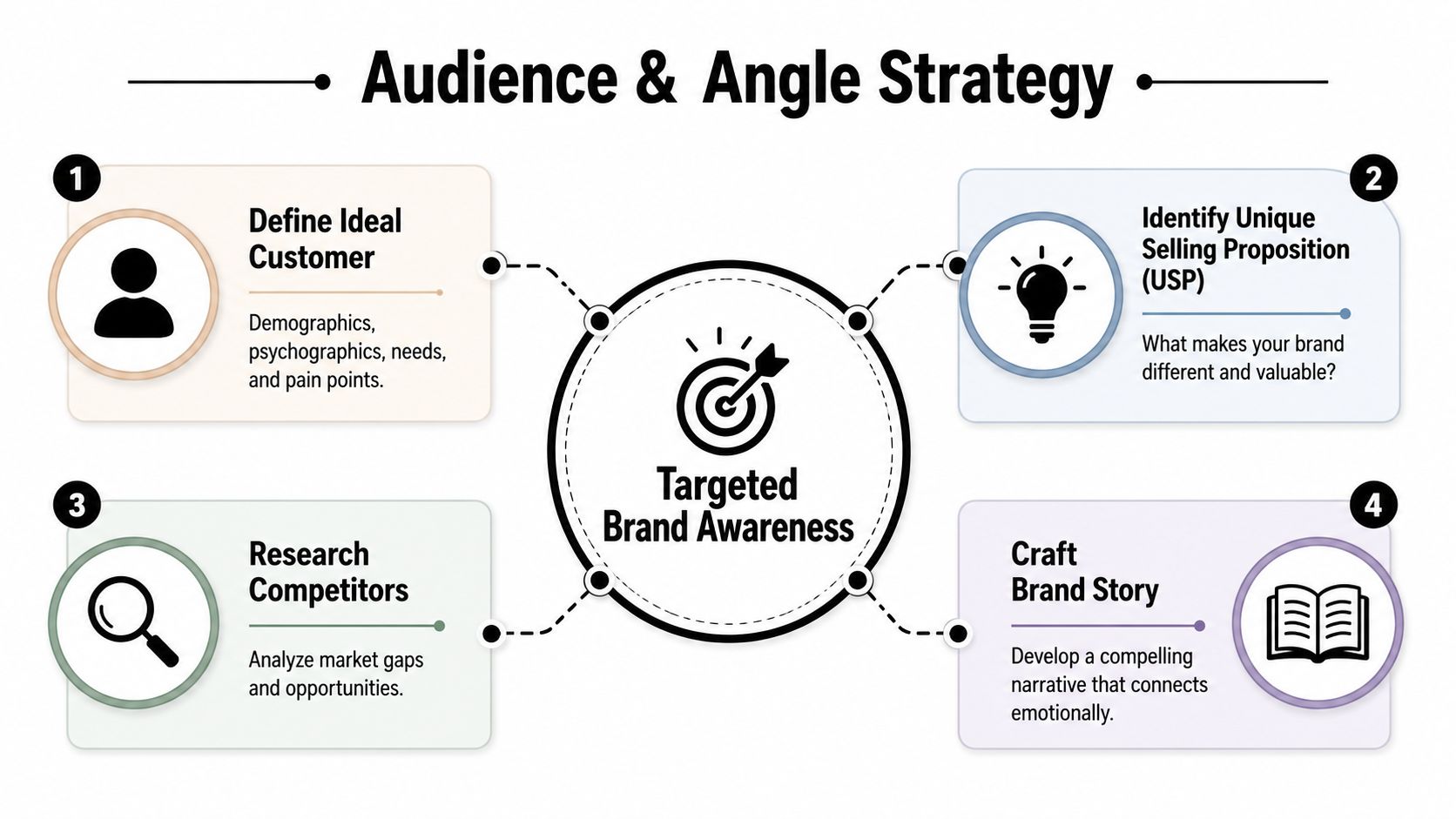
Finding Your Audience and Your Angle
New advertisers often make the same expensive move. They go broad too early, trust Meta to figure it out, and end up paying to educate people who were never good prospects.
Start narrower.
Start with a minimum viable audience
A new store needs a minimum viable audience. That's the smallest realistic group of people who are likely to care about the product now.
Don't begin with "women 18 to 65" or "all pet owners." Build from concrete traits:
- Current pain point: What problem do they already feel?
- Context of use: Where does the product fit into daily life?
- Purchase mindset: Is this impulse, problem-solving, convenience, or identity?
- Content habits: What kind of content are they already watching on Instagram or Facebook?
If you need help narrowing that profile, this guide to demographic targeting for paid social is useful because it forces you to stop thinking in broad market categories and start thinking in buyer segments.
A good starting audience for Meta is usually built around one clear use case. A kitchen gadget isn't for "people who cook." It might be for apartment renters who want quick cleanup, or busy parents who want less friction at dinner time. That's the difference between relevance and waste.
Pick angles that match buyer awareness
Once the audience is clear, choose the angle. The angle is the frame that makes the same product feel immediately relevant.
For new DTC stores, these angles usually work well:
-
Problem to solution
Best when the buyer already feels the pain. Example: a lint remover shown against pet hair on black clothing. -
UGC-style demonstration
Best when the buyer needs proof that the product is real and simple. This works especially well for practical home, beauty, and convenience items. -
Social proof
Useful when the category feels risky or saturated. Focus on believable reactions or outcomes, not hype. -
Identity
Strong when the product says something about the buyer. This is common with fitness, skincare, fashion accessories, and niche hobby products. -
FOMO or timely relevance
Best used lightly. It can create attention, but it won't build durable memory if that's the only message.
One audience can respond to multiple angles. One ad should not try to use all of them at once.
Use video to test message before scale
Meta awareness campaigns usually benefit from short video because people process the product faster when they see it in use. That's also consistent with the earlier point that many consumers prefer learning through video.
A practical workflow looks like this:
- Record simple clips on a phone.
- Create several hooks for the same product.
- Keep the first seconds focused on the problem, product, or result.
- Test different angles against the same audience before expanding targeting.
Here's a helpful example format to study:
If an angle gets attention but doesn't create decent comments, saves, profile visits, or later branded traffic, it may be loud without being memorable. That's still useful information. Kill it early.
Designing Creatives That Build Brand Memory
A lot of small brands make creatives that are built to interrupt but not to stick. The ad gets a glance, maybe even a click, but the buyer forgets the brand five minutes later. That defeats the point of awareness.
Your awareness creative has one core job. It should make the viewer remember who you are and what category problem you solve.
What people should remember after seeing your ad
If someone scrolls past your ad and can't later name the product type, the brand cue, or the use case, the creative probably wasn't strong enough.
That doesn't mean it needed more design polish. It usually means it needed more clarity.
Common failure modes in awareness measurement include over-relying on direct conversions and vanity metrics, and HubSpot's review of brand awareness measurement mistakes explicitly warns that direct conversions alone are a poor short-term success metric for awareness campaigns. That's why a flashy ad with cheap clicks can still be a weak awareness asset.
A simple creative checklist for Meta
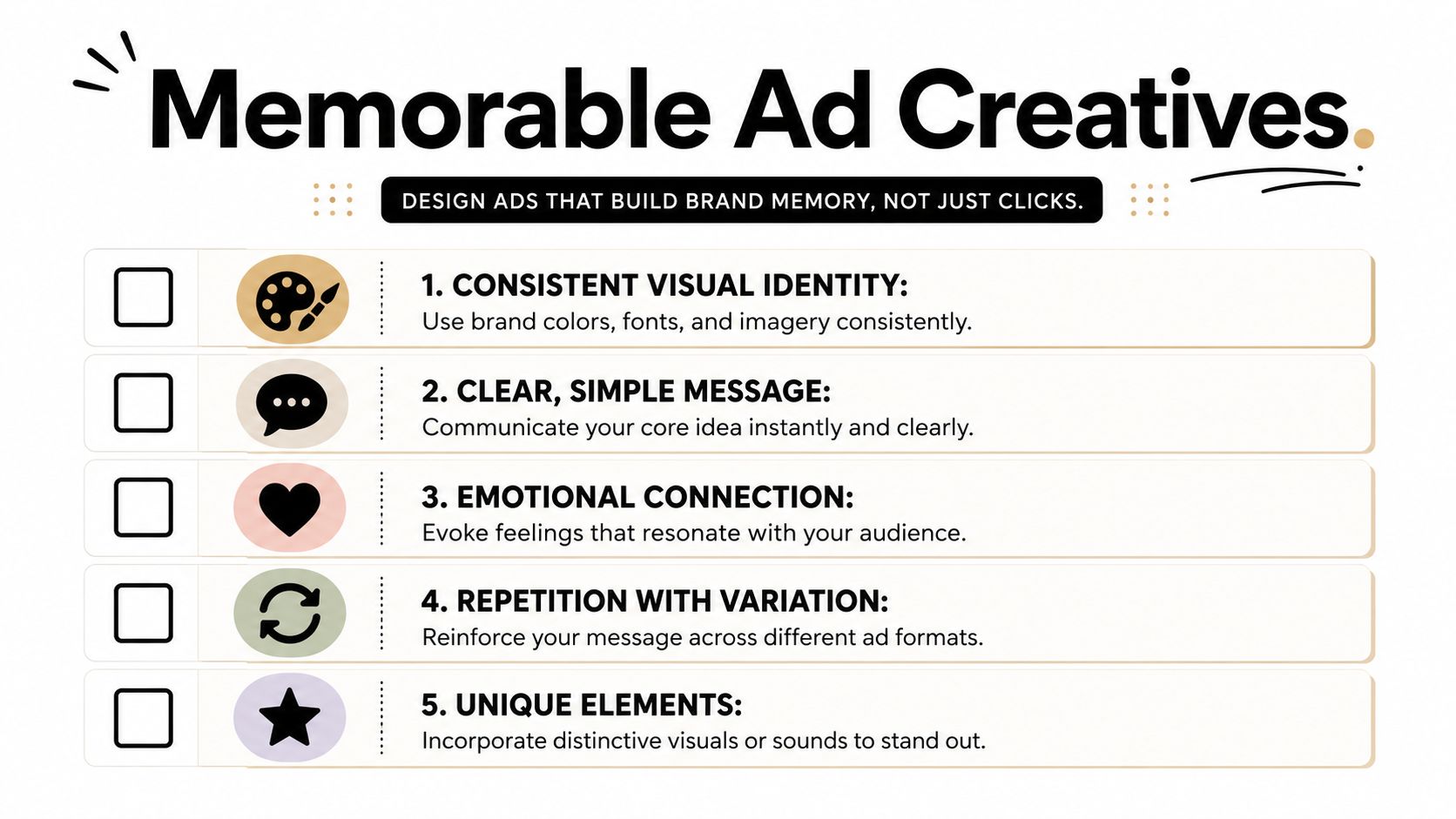
Use this checklist before you launch any awareness ad:
- Brand appears early: In video, make sure the brand name, packaging, logo, or recognizable visual cue shows up in the first seconds.
- One message only: Don't stack five benefits. Pick the one idea tied to the angle.
- Mobile-first framing: Content is frequently viewed on a phone, often with sound off. Use readable text and obvious visual action.
- Distinctive cues: Reuse the same colors, tone, product framing, or editing style across variations so repeated exposure builds memory.
- Clear product context: Show the product being used in the exact situation the buyer recognizes.
- Natural voice: UGC-style scripts should sound like a customer, not a media buyer trying to sound like a customer.
A low-budget founder can do this with a phone camera, CapCut, Canva, and product shots from their own space. You don't need agency-grade production. You need consistent cues and a clean message.
If you're also testing click-focused variants later, this breakdown of how to improve click-through rates helps separate memory-building creative from conversion-focused creative. Keep those goals distinct.
Creative reality check: If the ad would still make sense after removing your brand name, you've probably made a category ad, not a brand ad.
The strongest awareness creatives repeat the same idea with slight variation. New hook. Same cue. New scene. Same promise. That's how a small store starts to feel familiar instead of random.
Budgeting and Measuring Your Campaign Lift
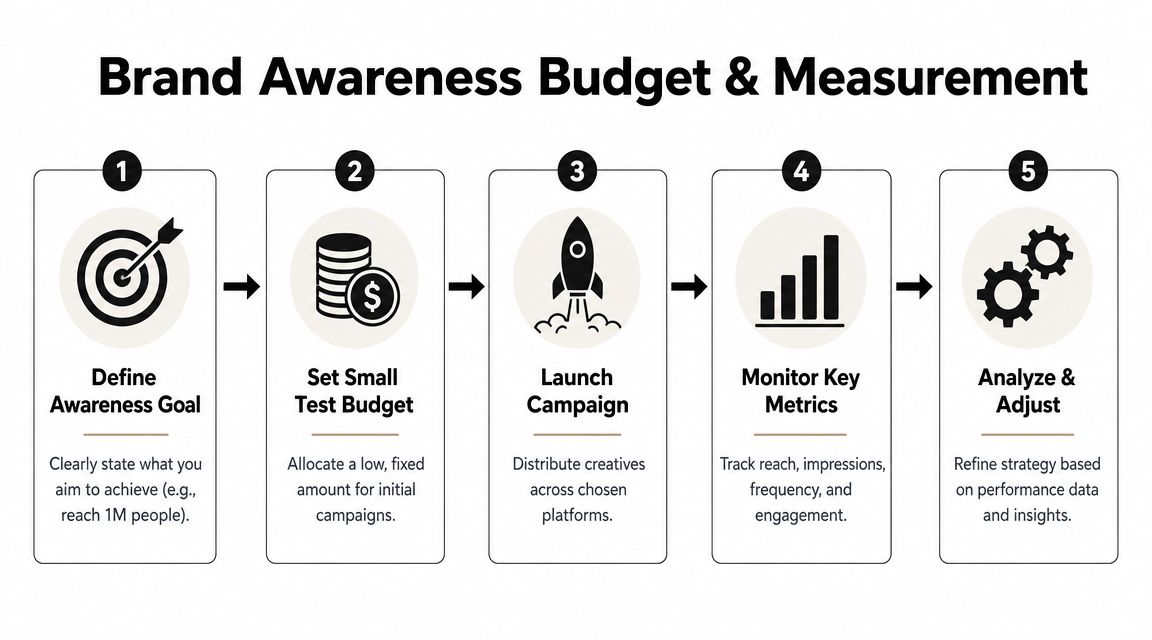
Many beginners often freeze at this stage. They don't know how much to spend, and they don't know what proof to look for afterward. So they either overspend and panic or underspend and learn nothing.
Keep the first test boring.
How much to risk on a first test
Use a small carved-out awareness budget from your overall Meta spend, not a random extra budget you "try if there's room." Fixed allocation creates discipline.
The exact amount depends on your cash flow, margin, and how quickly you need feedback, so don't copy someone else's number. What matters is that the test budget is:
- Small enough that failure won't hurt the business
- Large enough to generate a real exposure pattern
- Separate from your conversion budget
- Stable for the test window instead of edited every few hours
A lot of one-product stores sabotage themselves by making constant budget changes before the market has time to respond. Awareness needs a cleaner read than that.
How to measure lift without fancy tools
You do not need an enterprise setup to get useful signal. You do need a baseline before launch.
A robust measurement stack should combine digital analytics with lift methods, and the plan should be built before launch so you can isolate impact, according to Newage's guide to measuring media campaigns.
For a lean ecommerce setup, track lift in a few places:
-
Google Search Console
Watch for branded queries. If more people search your store name or product-plus-brand phrasing after exposure, that's meaningful. -
Google Analytics 4
Check direct traffic and repeat visits. This isn't perfect, but movement here matters when paired with other signals. -
Meta engagement patterns
Look at profile visits, video retention trends, and comment quality. Don't obsess over likes. -
Organic social mentions
Search your brand on Instagram, TikTok, and Facebook. Small increases can matter for a new store.
One source gives a useful benchmark: new brands can often achieve 15 to 25% aided awareness and 5 to 10% unaided awareness within their primary target audience, depending on execution and market conditions, and strong campaigns tend to move multiple indicators at once, according to Helm's guide to measuring brand awareness.
That last part is important. Don't trust one metric by itself. If direct traffic rises, branded search rises, and social mentions rise together, you likely created real lift. If one metric jumps while everything else stays flat, inspect the data before celebrating.
A practical mindset for founders is to treat awareness like a system check, not a magic switch. This primer on data-driven marketing is a good reminder that better decisions usually come from triangulating several signals instead of chasing one dashboard number.
Your First Brand Awareness Campaign Checklist
A first campaign doesn't need to be complex. It needs to be controlled. Build the measurement plan before launch, because a complete brand-awareness setup combines digital analytics with lift methods, and you can't isolate impact if you start tracking after the campaign is already running.
Before you launch
- Define one audience: Start with the smallest realistic buyer segment.
- Choose one angle per ad: Problem to solution, UGC, identity, or social proof.
- Set the memory goal: Decide what the viewer should remember after the ad.
- Prepare baseline tracking: Note your current branded search activity, direct traffic pattern, and social mention level.
- Create cue consistency: Keep the same brand visuals, tone, and product framing across variations.
During the campaign
- Watch frequency: Repetition helps until it becomes annoying.
- Read comments manually: They reveal confusion, interest, and message mismatch faster than most dashboards.
- Avoid constant edits: Too many changes ruin the read.
- Compare angles, not just ads: Sometimes the message is wrong even when the creative format is fine.
After the campaign ends
- Check for branded search lift
- Review direct and returning traffic
- Look for movement across multiple indicators
- Keep the winning cue system: Reuse the visual and message patterns people remembered.
- Feed the warm audience into retargeting and sales campaigns
Brand awareness campaigns don't need a big-brand budget to matter. They need a narrow audience, a memorable message, and a founder willing to measure the right things.
If you're launching your first product and want a simpler way to turn a product URL into a practical Meta ads plan, Social Loop AI helps first-time ecommerce owners build audience targeting, choose strong ad angles, generate brand-aware creatives, and turn a limited budget into a structured test plan without hiring an agency.