Blog
Ecommerce Content Marketing Blogging Guide 2026
Published June 10, 2026
You're probably looking at your store and thinking the same thing most new ecommerce owners think. You need sales now, your product page still needs work, your ad account is waiting, and someone keeps telling you to “start a blog” like you have spare time lying around.
That hesitation makes sense. If blogging means publishing fluffy SEO articles and hoping Google sends buyers someday, it's a bad use of a small budget.
But that's not the only way to use it. In ecommerce, content marketing blogging works best when you treat the blog as the place where your best marketing ideas get developed first. One strong post can become your email angle, your Instagram carousel, your product education page, your retargeting message, and the hook for your next batch of Meta ads. The blog stops being a side project and starts acting like the center of your content system.
Table of Contents
- Why Blogging Still Matters for Ecommerce in 2026
- Building Your Content Foundation Before You Write a Word
- Turning Great Ideas into High-Performing Blog Posts
- Finding Your Unique Angle in a Crowded Market
- The Multiplier Effect Repurposing Posts into Social Ads
- Measuring What Matters and Closing the Content Loop
Why Blogging Still Matters for Ecommerce in 2026
A lot of founders assume blogging lost its place once short-form video took over. That's only half true. Video grew fast, but blogging never disappeared. In HubSpot's 2026 State of Marketing report, blog posts were used by 38% of marketers in 2025, making them one of the most common content formats, and HubSpot also reports that blog posts were among the top five highest-ROI content formats reported by marketers.
That matters for a new store owner because it tells you blogging still earns its keep. Not as a publishing hobby. As a working marketing asset.
The mistake is treating content marketing blogging as a standalone SEO job. If you do that, every post has to carry too much weight. It has to rank, attract traffic, educate the reader, and somehow sell the product. Most new stores don't have the time or authority for that approach.
A better model is simpler. Use the blog to develop and organize the ideas your whole store needs:
- Customer education: Answer the questions buyers have before purchase.
- Message testing: See which hooks and objections keep showing up.
- Creative fuel: Pull headlines, benefits, examples, and angles into social and ads.
- Sales support: Give buyers something deeper than a product page when they need more conviction.
Practical rule: If a blog post can only live on your blog, the topic is probably too weak.
For small brands, one useful article can do the work of several disconnected marketing tasks. That's why blogging still matters. It gives you a durable place to think through your strongest commercial ideas, then reuse them everywhere else.
Building Your Content Foundation Before You Write a Word
Most weak blog programs fail before the writing starts. The owner opens a blank doc, picks a keyword from a tool, writes whatever comes to mind, and publishes something that doesn't fit the buyer, the offer, or the stage of intent.
A better start is to build a small foundation. You don't need a giant strategy deck. You need a clear customer, a few topic lanes, and a realistic plan for what your blog is supposed to do.
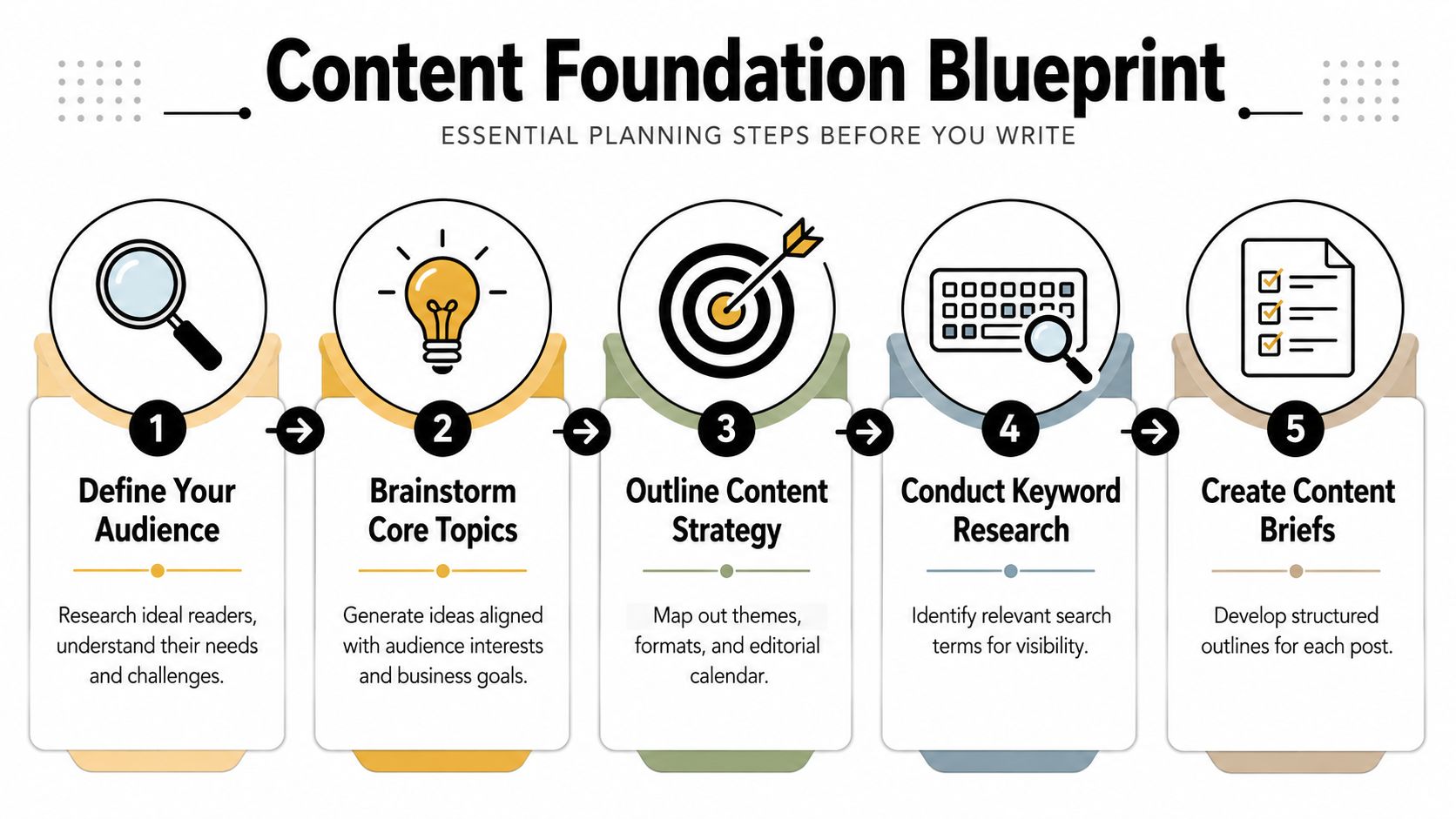
Start with customer problems, not keywords
If you sell reusable water bottles, don't begin with “best water bottle” because it sounds high intent. Start with actual questions buyers ask before that search:
- Daily frustration: Water gets warm too fast
- Lifestyle concern: Need something leakproof for commuting
- Comparison problem: Stainless steel versus plastic
- Identity fit: Wants a bottle that matches a low-waste lifestyle
Those are content inputs. Keywords come after.
One practical shortcut is to pull language from product reviews, support emails, DMs, Reddit threads, and competitor reviews. You're looking for repeated phrases, not polished marketing language. That raw wording usually leads to stronger topics because it reflects how buyers think.
If your positioning still feels fuzzy, study examples of clear offer framing and benefit language. A few strong value proposition examples for ecommerce and conversion writing can help you tighten the angle before you commit to topics.
Map topics to buyer intent
A useful ecommerce blog isn't evenly spread across every possible topic. It should skew toward the stages where people discover options and compare solutions. StoryChief's guidance on blog content strategy says the majority of posts should target Awareness, Research, Consideration, and Selection, while the remaining stages should make up only about 10% to 15% of the program.
For a small store, that's a helpful filter. It keeps you from wasting effort on content no one needs yet.
Here's a simple way to view this:
| Buyer stage | What the reader is asking | Example blog angle |
|---|---|---|
| Awareness | What's causing this problem? | Why gym towels keep smelling after washing |
| Research | What options exist? | Bamboo versus cotton gym towels |
| Consideration | Which type is right for me? | What to look for in a quick-dry gym towel |
| Selection | Which brand should I trust? | How our towel differs from standard microfiber options |
Notice what's missing. Random trend posts, broad lifestyle essays, and company updates that don't help a buyer move forward.
The best early topics sit one step before the sale. They help the reader make a decision they were already trying to make.
Set a cadence you can keep
A solo founder doesn't need a huge calendar. You need consistency that survives busy weeks.
For most new stores, a workable rhythm looks like this:
- Choose one core topic per product line: Stay narrow enough to build relevance.
- Draft one strong post at a time: Don't split your focus across five half-finished ideas.
- Repurpose before you publish the next one: Get email, social, and ad angles from the post you just wrote.
- Review after a few posts: Keep the themes that drive interest and drop the ones that don't.
What doesn't work is trying to mimic a media company. If your store can only support one thoughtful article every few weeks, that's fine. A smaller library of useful, buyer-aligned posts beats a pile of generic content every time.
Turning Great Ideas into High-Performing Blog Posts
Once the topic is right, the next job is turning that idea into something readable, searchable, and commercially useful. Many ecommerce blogs often fall apart at this point. The owner knows the product well, but the post wanders, repeats itself, and never guides the reader toward a decision.
That usually happens because there's no system behind the writing.

Research on content-marketing effectiveness found that organizations do better when they commit to strategy, create content that matches target-group needs, and measure performance regularly. The same research also connects stronger performance to specialization and systems that support it, which is a good reminder that your blogging process should be repeatable, not improvised every week, as shown in this content-marketing effectiveness study.
Use a brief before you draft
A content brief sounds fancy, but for a store owner it can stay short. One page is enough.
Include these fields:
- Primary reader: First-time buyer, repeat buyer, gift shopper, or someone still problem-aware
- Main question: The single question this post must answer
- Search intent: Learning, comparing, or deciding
- Product tie-in: Which item or collection naturally connects to the topic
- CTA: Read another guide, join the email list, or view the product page
This step prevents a common mistake. Writing an informative post that never connects back to what you sell.
A post called “How to Choose the Right Nonstick Pan” shouldn't end with vague lifestyle advice. It should help the reader evaluate material, weight, care, and cooking habits, then make the next step obvious.
Write for scanning, then optimize for search
Readers don't typically read blog posts line by line. They scan headings, skim examples, and slow down only when they see something useful. So your structure matters as much as your ideas.
A practical draft workflow looks like this:
- Start with the decision problem: Name the exact choice the reader is facing.
- Use specific H3s: “Best materials for daily use” is better than “Material considerations.”
- Keep paragraphs short: Dense text kills attention.
- Use comparison tables when the topic includes options: They help a buyer narrow choices quickly.
- Add product-context examples: Show how the advice applies in an actual buying situation.
Here's a simple example for an ecommerce post:
| Weak approach | Better approach |
|---|---|
| “Yoga mats are important for your workout.” | “If your mat slips during sweaty sessions, grip matters more than thickness.” |
| “There are many factors to consider.” | “Most buyers should choose based on grip, portability, and cleaning routine.” |
| “Read on to learn more.” | “Start with the type of workout you do most often.” |
Search optimization still matters, but it comes after the draft makes sense. Write a clear title. Use the main phrase naturally in the intro, headings, and image alt text when appropriate. Keep the meta description honest. Don't stuff keywords into every sentence.
Editing lens: If a sentence sounds like it was written for a crawler instead of a customer, rewrite it.
Add conversion points without derailing the article
A high-performing ecommerce blog post should help the reader and move them closer to a buying action. That doesn't mean dropping product links every few lines.
What works better is placing the offer where the reader naturally wants it.
Use these CTA patterns:
- Mid-article contextual CTA: When discussing a feature or product type, link to the relevant collection.
- Soft educational CTA: Offer a related guide for readers still in research mode.
- End-of-post decision CTA: Direct readers to the product page, bundle, quiz, or comparison page.
- Email capture CTA: Useful when the purchase cycle is longer and the reader needs more touches.
What doesn't work is the hard pivot. A post that spends most of its time helping the reader and then suddenly shouts “Buy now” loses trust. The CTA should feel like the next logical step, not a trapdoor into a sales page.
For small stores, that's the whole game. Structure the post so it answers a real question, proves you understand the buyer, and leaves the reader with one sensible next move.
Finding Your Unique Angle in a Crowded Market
Most ecommerce niches already have the obvious topics covered. If you sell coffee gear, skincare, supplements, bedding, pet accessories, or kitchen tools, the internet is already full of “best tips,” “ultimate guides,” and “top mistakes” articles.
So the problem isn't coming up with a topic. The problem is publishing something that deserves attention.
Copyblogger points to a gap many guides skip: they say you should add something new and build a unique point of view, but they don't give a repeatable way to find a contrarian angle that is both useful and defensible. That's the exact challenge called out in this Copyblogger discussion of differentiated content marketing.
Don't try to be original everywhere
You do not need a radical point of view on every post. That pressure creates bad content fast. Some topics only need clarity and strong organization.
Save originality for the places where buyers are confused, skeptical, or stuck choosing between similar options.
In practice, those are usually:
- Comparison topics: Buyers are deciding between materials, features, or product types.
- Category myths: Common beliefs keep people from buying correctly.
- Usage advice: The best answer depends on context, not one-size-fits-all advice.
- Trade-off decisions: Lighter versus sturdier, cheaper versus longer-lasting, minimalist versus feature-rich.
A brand selling sustainable yoga mats doesn't need a novel take on “what is yoga.” It might need a sharper angle on why “eco-friendly” isn't enough if the mat still wears out quickly or slips during practice.
A simple way to find a defensible angle
Use a three-part check before you commit to a post.
First, review the current search results. Look at the top-ranking pages and ask what they all seem to repeat. You're not trying to out-volume them. You're trying to spot sameness.
Second, list what they leave unresolved. Maybe they mention grip but ignore cleaning. Maybe they compare features but skip the buyer type each option suits. Maybe they give broad recommendations with no real trade-offs.
Third, test whether your angle can be proven. If your perspective depends on experience, product knowledge, customer questions, support tickets, or visible product differences, you can defend it. If it depends on vague opinion, it won't hold up.
Here's a practical framework:
| If the current content says | Your better angle might be |
|---|---|
| “Best material for everyone” | Which material fits hot sleepers, kids, or small apartments |
| “Top products ranked” | How to choose based on use case, not generic rankings |
| “More features is better” | Which features actually matter and which ones just raise the price |
A useful contrarian angle doesn't fight reality. It narrows the advice until it becomes more honest.
This is also where brand voice starts to matter. A store with a minimalist, no-hype tone can win by removing clutter and making decisions simpler. A founder-led brand can win by speaking plainly about what most products get wrong. Differentiation often comes from judgment, not decoration.
The Multiplier Effect Repurposing Posts into Social Ads
A blog post should not die on publish day. If it does, you spent hours creating one asset when you could have created a whole campaign.
That's why the most practical use of content marketing blogging in ecommerce is as a source asset. The blog is where you do the deeper thinking once. After that, you break the idea into smaller pieces for channels that need shorter, sharper formats.
A major gap in current advice is deciding what role blogging should play inside a fragmented content system. SmartBug Media highlights that question directly and asks what specific jobs blogging should do that social posts, email, video, or community content do not, in this SmartBug Media article about where blogging fits in your strategy.
What the blog should do that social cannot
Social is fast. Email is direct. Ads are compressed. A blog gives you room to do things those formats can't handle well:
- Develop an argument: Why one solution is better for a specific buyer
- Handle objections in order: Price, quality, use case, care, durability
- Clarify trade-offs: What the customer gains and gives up
- Create source material: A stable reference your shorter content can pull from
Take a store selling sustainable yoga mats. A strong post on choosing the right mat can hold the full logic. Grip versus cushioning. Studio use versus travel. Material feel. Cleaning habits. Longevity concerns.
From that one post, you now have a usable pile of assets.
One post, many assets
A single article can become a full week of content without feeling repetitive if each format does a different job.
For example:
- Instagram carousel: “Three signs your yoga mat is wrong for your practice”
- Short video hook: “Buying yoga mats based on thickness often leads to later regret”
- Email: “The hidden trade-off between comfort and grip”
- Retargeting ad copy: “Still comparing yoga mats? Start with how often your hands slip”
- Product page bullets: Reuse the clearest language from the article's decision points
If you also create creator-style content, a practical next step is learning how to make UGC that feels native to social platforms so the article's ideas can travel into testimonial-style and problem-solution formats without sounding like a blog excerpt.
Here's a useful walkthrough to keep that repurposing process concrete:
How ad testing gets easier
Small-budget brands achieve a powerful advantage. Good blog posts expose buyer language, objections, and decision triggers. That gives you better ad angles before you spend money testing random copy.
Say your post reveals these recurring themes:
- Buyers hate mats that slide during sweaty sessions.
- They worry “eco-friendly” means less durable.
- They want something that looks clean at home, not overly sporty.
Those become ad inputs. One creative leans into grip. Another addresses durability skepticism. A third focuses on design fit. The blog did the research work upfront.
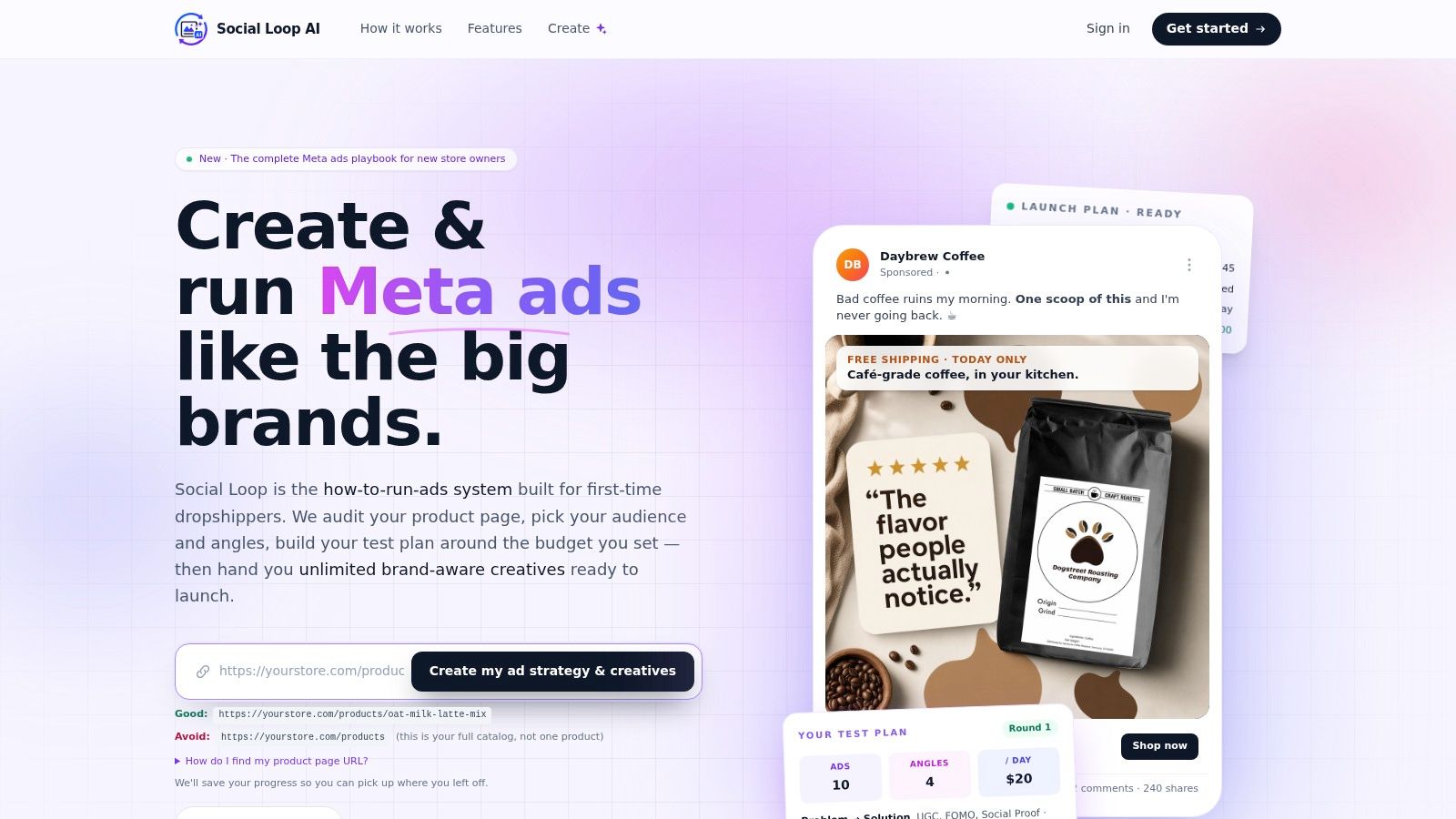
Tools can help organize that repurposing workflow. For example, Social Loop AI turns a product URL into a Meta ads launch plan and creative batch, which is useful when you want to convert product positioning, buyer objections, and tested angles into structured ad concepts without starting from scratch each time.
Your blog is where messy customer insight becomes reusable marketing language.
That's the multiplier effect. You aren't writing a post for traffic alone. You're building the raw material for the rest of your marketing.
Measuring What Matters and Closing the Content Loop
If you don't measure your blog against business outcomes, content becomes a busywork trap. You publish, maybe share the post once, glance at page views, and move on without learning anything useful.
That's a problem because content budgets are becoming more serious. Allied Market Research estimates the global content marketing market was valued at $413.2 billion in 2022 and projects it will reach $2 trillion by 2032, a 16.9% compound annual growth rate, as cited in this Siege Media roundup referencing Allied Market Research. Even if your store is tiny, the takeaway is clear. Businesses are treating content as an ongoing operating investment, not occasional filler.
Track decisions, not vanity
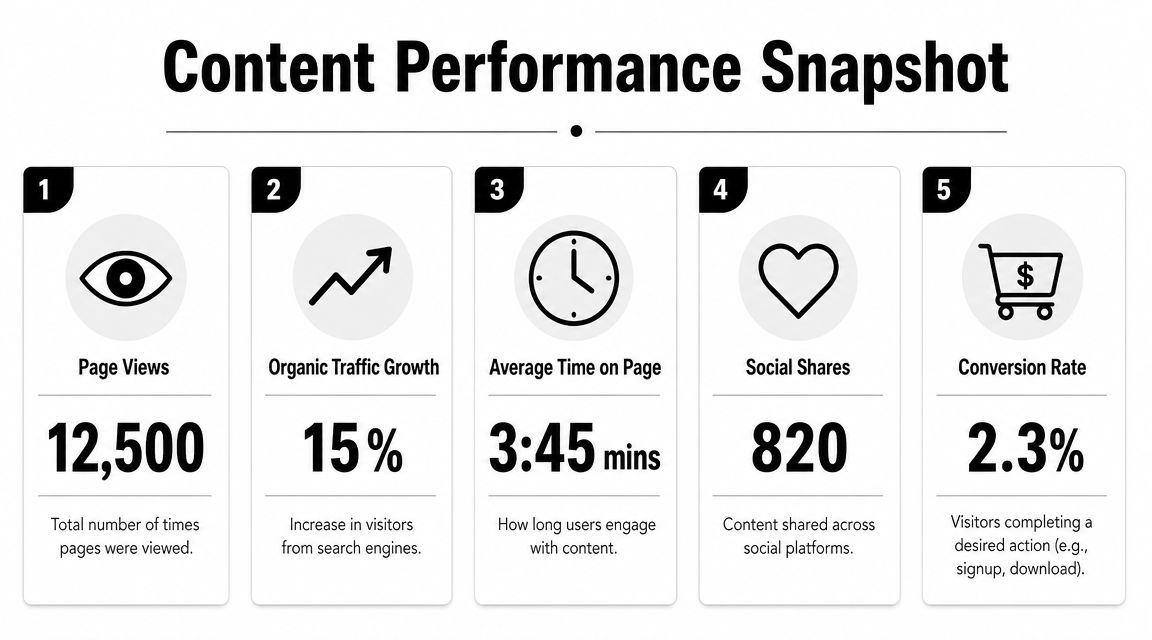
A small ecommerce brand doesn't need an elaborate dashboard. Start with a few signals that help you decide what to do next:
- Organic visits to the post: Useful, but only as a starting point
- Time on page or engaged sessions: Tells you whether the post holds attention
- Clicks to product or collection pages: Shows buying interest
- Email sign-ups from blog readers: Helpful for longer consideration cycles
- Sales influenced by blog visits: The most important signal when you can track it
The point isn't to admire numbers. It's to identify which topics and angles deserve another round in email, social, or paid media.
A practical approach is to review performance monthly and ask three questions:
| Question | What to look for |
|---|---|
| Which topics pulled in qualified readers? | Posts that led to product clicks or deeper site exploration |
| Which angles held attention? | Posts readers actually finished or spent time with |
| Which ideas transferred well into campaigns? | Hooks and objections that also worked in ads or social |
Build a feedback loop you'll actually use
Most founders don't need more data. They need a simpler habit.
Create a lightweight record for every post. Topic, buyer stage, core angle, CTA, product linked, and what happened after publication. Then compare that with what performs in paid and social.
If a blog post about “how to choose the right weighted blanket size” gets strong product clicks, that angle probably deserves more support. Turn it into an email subject line. Build ad headlines around the same pain point. Test a shorter social version. If another post gets traffic but no commercial response, don't force it into every channel.
For teams that want a more structured workflow, data-driven marketing decisions for ecommerce campaigns prove useful. The goal is not more reporting. It's making the next content decision with less guesswork.
Content marketing blogging pays off when every post teaches you something. Which question matters. Which objection blocks the sale. Which phrase gets attention. Which angle belongs in your next ad. That's how the loop closes.
If you want a simpler way to turn product positioning into usable ad angles and social creatives, Social Loop AI can help structure that process. It's built for first-time ecommerce owners who need a practical Meta ads launch plan, clearer buyer angles, and creative batches they can test without hiring an agency.