Blog
8 Top UGC Ad Examples to Copy for Meta Ads in 2026
Published June 2, 2026
Why do so many dropshipping ads fail when the product is solid, the store looks credible, and the offer should work?
In most accounts I audit, the problem is not budget. The ad loses the scroll before it earns belief. On Meta, polished brand creative often reads like an ad immediately. UGC can feel closer to proof from a real buyer, which gives it a better chance to hold attention long enough to sell the click.
That matters more in dropshipping because the ad has to do extra work. There is usually no brand history, no retail shelf presence, and no built-in trust. Bazaarvoice found that shoppers trust UGC in ads more than brand-created ads, and that consumer purchase decisions are heavily influenced by UGC, as shown in Bazaarvoice's UGC trust data.
This article is more than a list of UGC ad examples. It is a practical Meta playbook built for dropshippers who need creatives that can be produced fast, tested cleanly, and scaled without guessing. You will get eight repeatable UGC formats, why each one works, script angles you can adapt, test variations to queue up, and realistic expectations for what each format is trying to improve, whether that is thumbstop rate, CTR, hold rate, or conversion rate.
Many people get this wrong because they treat authenticity like an excuse for weak structure. Good UGC still needs a clear hook, a believable problem, a product moment, and a reason to act now. If you want a stronger foundation before building creatives, this user-generated content strategy guide helps frame the system behind it.
Speed also matters. A format is only useful if you can turn it into fresh variations before fatigue hits. Tools like Social Loop AI help generate these angles from a product URL in minutes, which is useful when you need to test multiple hooks, creators, and offers in the same week instead of waiting on a full creative cycle.
Table of Contents
- 1. Problem Solution UGC Format
- 2. Authentic Unboxing and First Impression UGC
- 3. Social Proof Testimonial UGC Results Focused
- 4. Day in the Life Integration UGC
- 5. Side by Side Comparison UGC
- 6. FOMO and Scarcity Driven UGC
- 7. Identity and Aspiration UGC
- 8. Quick Tip and Educational UGC
- Comparison of 8 UGC Ad Formats
- Your Next Step From Examples to Execution
1. Problem Solution UGC Format

This is the format I'd start with for most dropshipping products because it gives the viewer a reason to care before you show the product. The creator opens with a frustration they already recognize. Then the product appears as the fix, not as a random object pushed into frame.
For a pimple patch brand, the opening line might be, “I kept waking up to new breakouts before work.” For a posture corrector, it might be, “By 2 p.m. my back was done.” For a kitchen organizer, “My drawers looked clean for one day and then turned into chaos again.”
Build the hook around a painful moment
The first three seconds carry most of the weight. Don't open with “Hey guys, I found this product.” Open with the loss, annoyance, or embarrassment the buyer already feels.
Practical rule: If the hook could fit any product, it's too weak.
A strong version shows the problem in context. Messy counter. Red skin. Tangled cables. Late-night frustration. Then the creator demonstrates the fix in a way that feels lived-in, not staged. If you're selling a phone mount for cars, show the shaky navigation problem first. Then show the product during a real drive, with a clear angle of use.
Script to copy
Use this skeleton:
- Hook: “I was so tired of [specific problem].”
- Context: “I tried [old behavior], and it still didn't fix it.”
- Product reveal: “Then I started using [product name].”
- Demo: Show setup, use, and immediate relief.
- Outcome: “Now [life feels easier / cleaner / faster / less stressful].”
- CTA: “If you deal with this too, it's worth trying.”
What usually doesn't work is jumping from problem to hard sell too fast. Keep the product in the story. Don't dump five benefit overlays at once. Brands that want a repeatable process for this should think in angles first, then creatives. A solid user-generated content strategy for paid social helps you map separate pain points to separate buyer segments instead of forcing one generic script on everyone.
2. Authentic Unboxing and First Impression UGC
Some products sell better when the first reaction is the ad. This format works especially well for items where tactile quality matters, such as jewelry, phone accessories, candles, fashion pieces, desk gear, pet products, and giftable items.
The key is restraint. A good unboxing ad doesn't sound like a host reading a feature list. It sounds like someone noticing real details. “The packaging is nice.” “This feels heavier than I expected.” “I thought this fabric would be thin, but it's not.”
What to capture on camera
Use natural light. Keep the camera handheld but stable. Show the shipping box, inner packaging, close-ups, and the first use. For a fashion item, get the try-on quickly. For a candle, show the lid, vessel, wick, and reaction to the scent. For a portable blender, show what's in the box and then one immediate use clip.
The best moment is usually not the opening. It's the first tiny surprise. A magnetic close. A soft lining. A satisfying click. A cleaner finish than expected.
- Lead with curiosity: Start on the package or a partial reveal.
- Capture texture: Zoom in on stitching, finish, buttons, material, or weight.
- Keep reactions simple: Underplay it. Forced excitement kills trust.
- End with use: Don't stop at “looks nice.” Show how it fits into real life.
A lot of bad unboxing ads fail because the product arrives looking better than the creator sounds. Let the object do some of the selling.
Script to copy
A candle ad can be as simple as:
I wasn't expecting much from the packaging, but this feels premium. The jar is heavier than I thought. And the scent isn't overpowering at all. I'd 100% leave this out on my desk or gift it.
If you're dropshipping, this format only works if the delivered product can survive close inspection. If the finish looks cheap, the ad will expose it faster than a product page will.
3. Social Proof Testimonial UGC Results Focused
This one is less forgiving, but when it hits, it scales. Testimonial UGC works best when the product solves a problem people want proof for. Think shapewear, cleaning tools, storage products, beauty tools, sleep products, or software.
The mistake most beginners make is using empty praise. “I love this so much” is weak. The viewer needs a before and after. They need a concrete change, even if you express it qualitatively rather than with a hard claim.
What makes this believable
The strongest version sounds like a customer explaining what changed in daily life. For a desk organizer, “I stopped losing chargers and pens every morning.” For a scalp massager, “My wash routine is finally something I stick with.” For a meal prep container set, “I stopped ordering lunch because I prep now.”
Industry benchmarks often frame this format as a conversion driver. A summary collected by InfluenceFlow's UGC performance benchmark article cites a widely used target of a 25 to 40 percent conversion-rate lift in UGC-focused campaigns, with some summaries also reporting typical gains in a similar range and lower customer acquisition cost versus non-UGC creative. I treat those as testing benchmarks, not guarantees.
Script to copy
Try a stacked testimonial structure:
- Creator 1: “I bought this because my bathroom counter was always a mess.”
- Creator 2: “Setup took me a minute, and now everything has a place.”
- Creator 3: “The biggest thing is I really keep it organized now.”
That stack works because each person contributes a different piece of proof. One names the problem. One reduces setup fear. One describes the lasting result.
For Meta specifically, keep your overlays short and readable. If you're writing these into ad tests, Meta ads best practices for beginners matter more than fancy editing. Clear framing, legible captions, and a believable voice beat polished motion graphics almost every time.
4. Day in the Life Integration UGC
This is softer sell creative. It works when the product isn't dramatic enough for a big reveal but becomes persuasive in routine. Coffee gear, skin care, planner accessories, water bottles, lunch containers, sleep products, blue-light glasses, and home organization tools fit well here.
The ad doesn't say, “Buy this now.” It says, “This is part of how I live.” That subtle shift is useful for cold audiences who resist obvious direct response hooks.
Make the product part of the routine
A strong day-in-the-life ad has multiple touchpoints. If the product only appears once, it feels inserted. If it appears naturally across the routine, it feels essential.
A simple example for a stainless steel tumbler:
Morning commute clip. Bottle on desk clip. Refill clip at the gym. Nightstand clip later in the day. The product keeps reappearing without demanding attention.
This also helps with dropshipping products that are hard to explain in one sentence. A silk pillowcase, for example, sells better in a bedtime routine than in a standalone pitch. A cable organizer sells better inside a workday desk reset than in a feature-heavy demo.
- Show repetition: The product should appear in more than one moment.
- Tie it to a behavior: Hydrating, getting ready, commuting, organizing, winding down.
- Use a creator who fits the audience: Don't fake a lifestyle match.
- Let the voiceover stay casual: It should sound observed, not written by a brand manager.
If the routine feels real, the product gets borrowed credibility from the creator's lifestyle.
Script to copy
“Every morning I throw this in my bag before I leave. I use it at my desk, refill it after lunch, and it still keeps everything cold by the end of the day. It's one of those things I didn't think I needed, and now I use it constantly.”
Don't overbrand this format. The more branded it looks, the less it feels like a habit.
5. Side by Side Comparison UGC
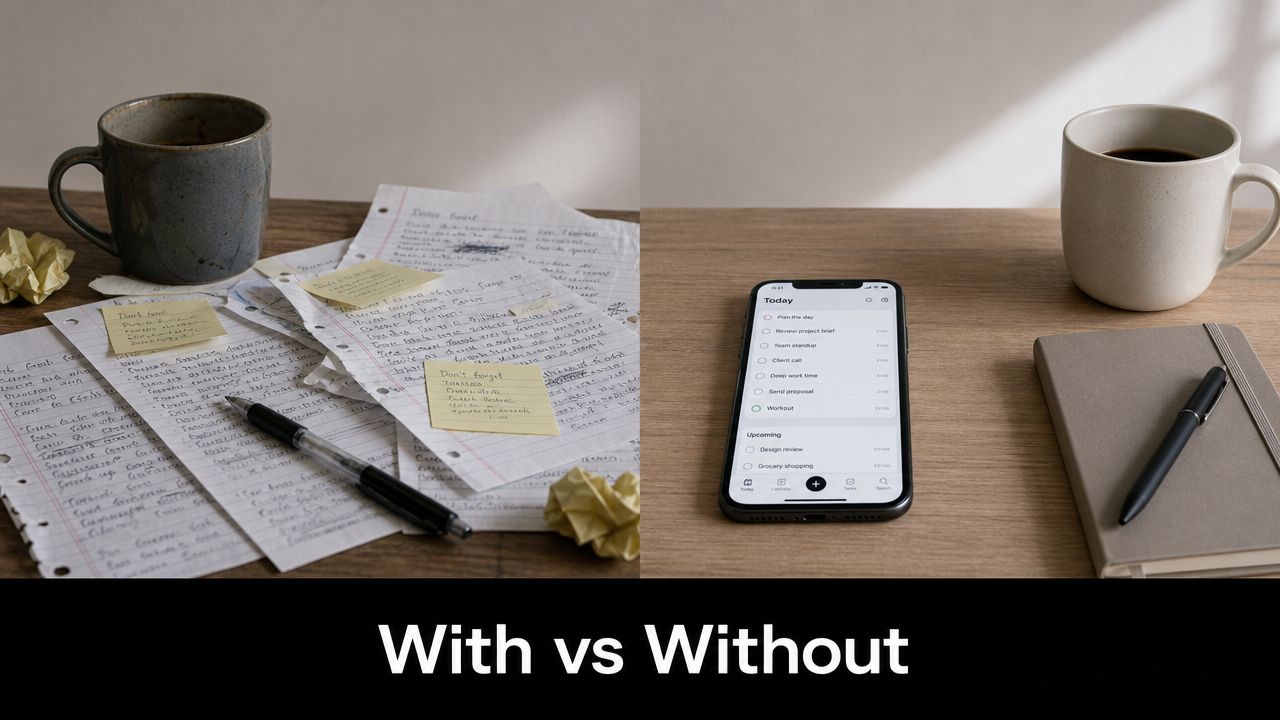
Comparison ads work because they remove imagination. The viewer doesn't have to guess the benefit. They can see the contrast.
You can do this without naming a competitor. In fact, for most dropshippers, it's cleaner to compare “with product” versus “without product.” That reduces legal friction and keeps the focus on friction versus ease.
Show friction versus ease
A vegetable chopper ad can show manual prep on one side and quick uniform cuts on the other. A lint remover can show a pet-hair-covered couch versus a cleaned surface. A drawer divider can show a chaotic drawer versus one where every item has a place.
The before side should feel annoying, not fake. If you overact the struggle, the ad turns cartoonish. Keep it believable.
There's also a trust advantage to this style. Bazaarvoice highlighted a concrete brand example in its UGC brand examples collection: Parachute saw a 35 percent higher click-through rate and 60 percent lower cost-per-click when it used UGC in ads and print. That doesn't mean every comparison ad wins, but it does support the broader point that user-led creative can make product differences easier to believe.
Script to copy
Use a simple visual structure:
- Left side: “How I used to do it”
- Right side: “How I do it now”
Voiceover example for a desk cable management product:
Before this, I'd waste time every morning untangling cords and looking for the right charger. Now everything stays in one place, and my desk feels usable.
One thing that doesn't work here is cluttered editing. If the viewer has to decode the comparison, you've lost them. Label each side clearly and keep the cuts tight.
6. FOMO and Scarcity Driven UGC
Urgency can convert fast. It can also wreck trust if you fake it. A lot of dropshippers overuse countdowns, “last chance” overlays, and pretend low stock language until buyers stop believing any of it.
This format works when there is a real reason to act now. Limited inventory. Seasonal demand. A real promo window. A bundle that ends. A restock people have been waiting on.
Urgency only works when it is real
The creator should sound like someone making a time-sensitive decision, not a late-night infomercial host. For a limited-color water bottle, they might say, “I waited too long on the last color and it disappeared, so I'm not doing that again.” For a holiday gift item, “I'm ordering now because shipping windows get tight.”
Operationally, many ugc ad examples online prove incomplete. They show the ad idea but skip whether you have the rights and disclosures needed to run it in paid media. Cohley's guidance on UGC video workflows and rights is useful here because a deployable ad needs more than authenticity. It needs a clear brief, asset specs, and content-rights scope for paid use.
Reality check: If you can't substantiate the scarcity, don't build the ad around it.
Script to copy
“I was going to wait, but this color keeps disappearing and I don't want to miss it again. I'm ordering tonight while it's still available. If you were already thinking about it, I'd grab it before it's gone.”
You can test this with deadline overlays, creator-led urgency, or both. But don't run scarcity creative continuously for months. Once buyers notice the deadline never changes, the format stops converting and starts damaging brand trust.
If you want a structured way to build urgency angles without making them sound fake, limited-time offer ad guidance for ecommerce is a better starting point than copying spammy templates.
7. Identity and Aspiration UGC
Some products don't sell because of utility first. They sell because they signal taste, values, discipline, or belonging. That's where identity-driven UGC works.
This format is strong for fitness accessories, minimalist desk setups, eco-focused goods, creator tools, premium basics, wellness products, and aesthetic home items. The buyer isn't just purchasing a function. They're buying a version of themselves.
Sell belonging, not just function
A reusable glass bottle can be framed as a hydration tool. It can also be framed as part of a cleaner, more intentional lifestyle. A planner can be sold as stationery. It can also be sold as something organized people carry because they take their time seriously.
The creator's fit matters more here than in almost any other format. If the person on camera doesn't naturally embody the audience's aspiration, the ad feels borrowed. For a minimalist desk lamp, use someone with a clean work setup. For a gym recovery product, use someone whose routine already feels disciplined.
Bazaarvoice's brand examples also cite Iconic London, which reported a 126 percent lift in conversion rate and an 11 percent lift in average order value within 12 months after implementing social tools that amplified customer-generated content in its ecosystem. I wouldn't use that as a blanket promise for identity creative alone, but it does reinforce that customer-led content can shape how shoppers value a brand.
Script to copy
As someone who likes keeping my space clean and simple, I'm picky about what stays on my desk. This is one of the few things that looks good and gets used every day.
What doesn't work is trying to force mission language onto a generic product. If the brand has no real identity, don't fake one. Sell utility first.
8. Quick Tip and Educational UGC
What gets a cold Meta prospect to stop scrolling faster than a product pitch? A useful tip they can apply right away.
That is why educational UGC works so well for dropshippers. It earns attention before asking for the click. The product becomes part of the method, which lowers resistance and gives the ad a better chance of surviving fatigue.
This format fits products that need a little context to sell. Beauty tools, kitchen tools, organizers, cleaning products, desk accessories, and any item with a small learning curve tend to perform well here. In my experience, it also gives you more angles to test than a standard promo because you can rotate lessons, mistakes, myths, and beginner instructions without changing the core offer.
Teach first, pitch second
The tip has to stand on its own. If the hook promises a shortcut, deliver a shortcut. A scalp brush ad should show a better wash routine. Drawer dividers should teach a simple organization rule. A laptop stand or desk accessory should explain proper screen height and posture in plain language.
That practical structure is what makes this format useful for scaling creative tests. As noted earlier, the creator pool is larger than it used to be. That gives brands more room to test the same lesson through different faces, tones, and filming styles instead of depending on one polished concept.
Script to copy
Many people organize this drawer by category, then wonder why it gets messy again. Set it up by what you reach for every day first, then separate the rest. I used these dividers to keep each section in place, and now it stays organized.
I usually test educational UGC in four versions:
- Tip-first: Open with the mistake, then teach the fix.
- Demo-first: Show the improved result in the first second, then explain how to get it.
- Myth-busting: Correct a bad habit or common assumption.
- Beginner-friendly: Walk through the first use case for someone who has never tried the product.
This format is also a strong fit for fast production. If you use a tool like Social Loop AI, you can turn one product benefit into multiple educational hooks, scripts, and creator variations in minutes. That makes it easier to build a real testing matrix, not just a pile of slightly different ads.
Comparison of 8 UGC Ad Formats
| Format | 🔄 Implementation complexity | ⚡ Resource requirements | 📊 Expected outcomes | 💡 Ideal use cases | ⭐ Key advantages |
|---|---|---|---|---|---|
| Problem → Solution UGC Format | Moderate, needs market research, scripted narrative and pacing | Moderate, creator with storytelling skill, mid-level editing, longer runtime | High engagement and trust; improved consideration and conversion | First-time product-market tests; wellness, productivity, beauty, home goods | Relatable storytelling that addresses objections and builds trust |
| Authentic Unboxing & First Impression UGC | Low, minimal scripting; raw capture preferred | Low, smartphone capture, real product, natural lighting | High perceived authenticity; reassures quality and presentation | Premium products, subscription boxes, new launches | Feels genuine, easy to produce, showcases packaging and quality |
| Social Proof Testimonial UGC (Results-Focused) | Moderate, requires verified users, compliance and clear metrics | Moderate, user data, visual proof (before/after), focused editing | Strong credibility and conversion when outcomes are measurable | SaaS, fitness, finance, educational platforms, conversion-focused ecommerce | Quantified results reduce skepticism and drive higher conversions |
| Day-in-the-Life Integration UGC | High, needs cohesive creative direction and routine scripting | Moderate–High, multiple scenes, consistent aesthetics, editing | Strong brand-awareness and aspiration; builds long-term recall | Lifestyle brands, premium positioning, wellness, fashion, home goods | Positions product as natural lifestyle staple; high authenticity |
| Side-by-Side Comparison UGC | Moderate, requires fair demos and clear comparative messaging | Moderate, split-screen/editing, demo setups, readable on-screen labels | Immediate clarity on advantage; strong scroll-stopping and fast decisions | Competitive markets, efficiency tools, price-focused dropship items | Demonstrates competitive advantage instantly; reduces consideration time |
| FOMO & Scarcity-Driven UGC | Low, simple urgency messaging but must be truthful | Low, creator CTA, timers/overlays, clear deadline copy | Short-term spikes in conversions; accelerates purchase decisions | Flash sales, inventory clearance, limited editions, seasonal offers | Drives urgency and quick conversions when scarcity is real |
| Identity & Aspiration UGC (Lifestyle Positioning) | High, needs established brand identity and precise creator fit | Moderate, curated visuals, aligned creators, consistent aesthetic | Builds loyalty and higher LTV; slower direct conversion | Mission-driven or premium brands, community-building strategies | Creates emotional belonging and reduces price sensitivity |
| Quick-Tip & Educational UGC (How-To Format) | Moderate, requires subject expertise and concise scripting | Low–Moderate, expert creator, simple edits, on-screen text overlays | High perceived immediate value; strong shareability and engagement | SaaS, educational tools, creator/entrepreneur audiences, marketing tools | Positions brand as expert; provides useful value before pitch |
Your Next Step From Examples to Execution
Studying ugc ad examples helps, but it won't fix an ad account by itself. Execution does. The shift is moving from random creative guesses to a small set of formats you can test on purpose.
For most first-time dropshippers, I'd start with two or three formats, not all eight. Pick the ones that match how your product creates belief. A skincare or wellness product usually benefits from Problem Solution UGC. A gadget or organizer often works with Side by Side Comparison. A product that needs trust fast may do better with Social Proof or Authentic Unboxing. If it fits naturally into routine, Day in the Life is often easier to scale than a loud direct-response pitch.
The trade-off is simple. More variety gives you more chances to find a winner, but too many weak tests create noise. Tight testing beats broad guessing. Keep the offer, audience, and landing page stable enough that you can tell what the creative changed.
This is also where most beginners overspend. They hire creators too early, order too many edits, or sink time into assets they haven't validated. A better workflow is to generate several angle-based concepts quickly, launch small tests, identify what earns clicks and holds attention, then invest deeper in the formats that prove themselves.
That's why a tool like Social Loop AI is useful for this stage. Instead of starting with a blank page, you can turn your product URL into a set of launch-ready Meta creative directions. That includes hooks, copy angles, and ad concepts built around the same frameworks in this article. For a new store owner, that shortcut matters. You don't need a full agency process just to get your first batch live.
The biggest mindset change is this. Don't ask, “What ad should I make?” Ask, “What trust mechanism does this product need?” If the buyer needs to see the pain solved, use Problem Solution. If they need visual proof, use Comparison. If they need to imagine the product in daily life, use Day in the Life. If they need confidence from other people, use Testimonial UGC.
Then test. Cut what doesn't earn attention. Keep what feels native to Meta, says one thing clearly, and gives the buyer a believable reason to click. That's how ugc ad examples become a system instead of a swipe file.
Social Loop AI helps first-time dropshippers turn a product URL into a practical Meta ads launch plan, angle-based creatives, and social content without hiring an agency. If you want faster testing with Problem Solution, Social Proof, FOMO, Identity, and other UGC-style formats already mapped to your product, try Social Loop AI.